Pachinko
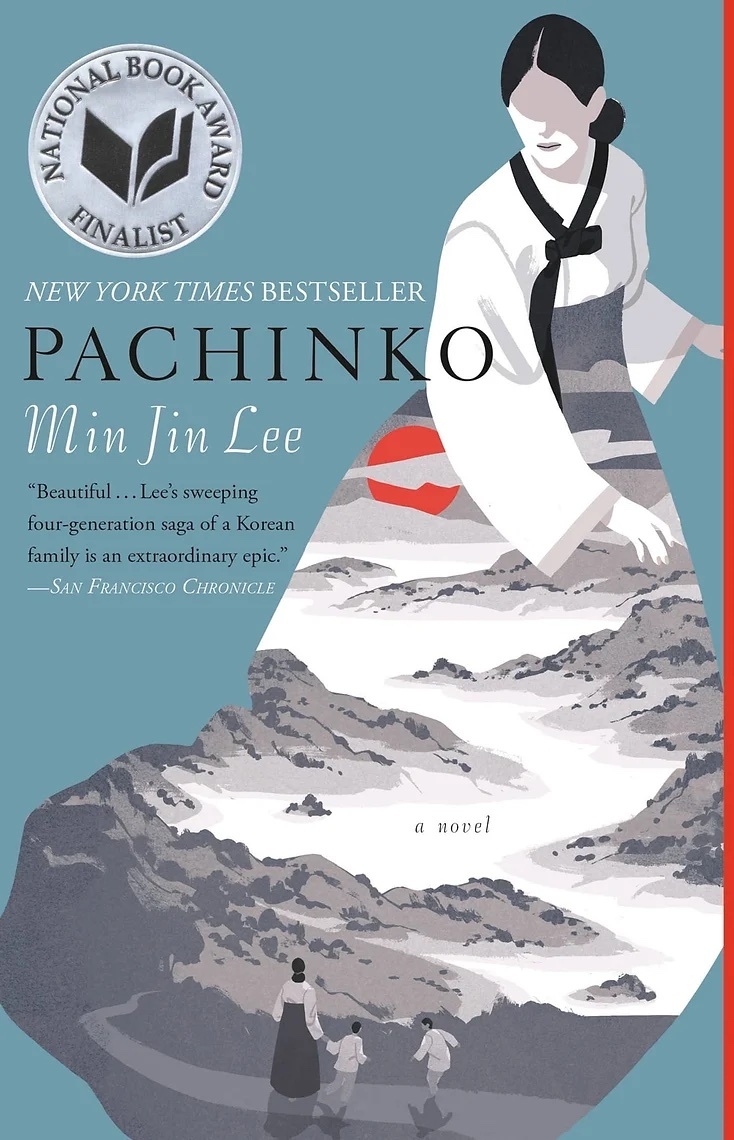
The last book is Pachinko, written by Min Jin Lee, which was published in 2017 by Grand Central Publishing, using the modern day offset printing technique.
Unlike the Pure Light Dharani Sutra and Jikji, Pachinko and most books printed today are made through mass production and intended for the audience and consumers of the general public.
Pachinko is a historical fiction novel written by Korean author Min Jin Lee and published in 2017. It is published by Grand Central Publishing, of Hachette Book Group. The novel follows a Korean family that immigrated to Japan, and the story spans four generations (Lee).
Context
Readership is declining in the digital age. Twenty million people who read at least one book in 1982 claimed that they no longer read any books in 2002 (Striphas 1). There is a strong relationship between digital media and printed books. For example, television personalities or people with online influence have the power to make certain books successful. Despite the digital age, materials such as printed books are still valued (Striphas 3).
Technology
Publishers and authors earn most of their money from selling physical books despite the advancements in digital books and media.
Most book covers are printed using black, cyan, magenta, and yellow ink. Books today are printed using printing machines that use large rolls of paper. The plates of the printing press transfer the text onto the paper. Books are printed around 32 pages at a time, and the sections are cut and folded to produce the pages. These sections of a book are bundled and then bound together. The book is glued together, and for hardcover books, a cardboard cover is attached before the book’s jacket (Harris and Prior).
Photomechanical typesetting, offset lithography, desktop publishing, automated bookbinding, and digital printing are the significant developments that distinguish twenty-first century book printing from that of the past (Henry 55).
Pachinko has sold over one million copies in the United States. In the digital age of printing, one million copies of a book are not all printed in the same print runs. The statement of one million copies of a book also does not mean that each of them are identical (Henry 55).
The prepress production phase covers all of the processes involved in preparing books for printing. In this phase, pages are formatted and grouped and illustrations and color are added to the layouts of the pages (Henry 58). In a digital prepress phase, every page is a digital file, and any hard copies are digitized with a scanner (Henry 61).
In offset lithography, text is printed on sheets of paper that are cut to standard sizes. Continuous rolls of paper run at high speeds through the printing press, and hot air dryers and chill rollers are used to set the wet ink that has been printed. On the type of press called a perfecting press, both sides of the paper will be printed during a single pass through the press. If the paper is printed one side at a time, the ink is allowed to dry before it enters the press with a second set of plates to print the other side. The method of printing with plates mounted on cylinders is more common than machines that use belt presses (Henry 64).