Life on the Coast: Interview with Italian American author, Ivan(o) Franco Comelli
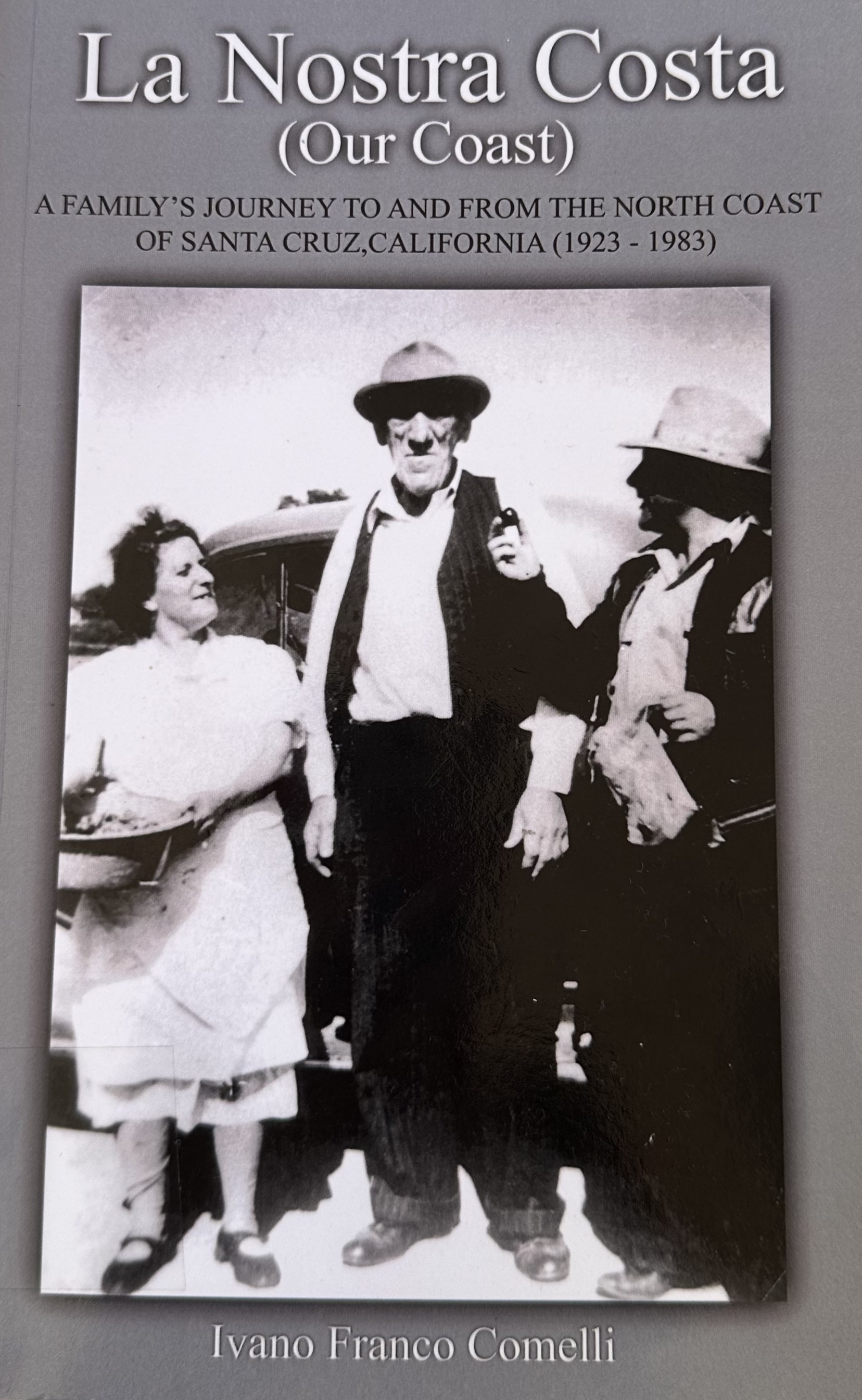
On March 1, 2024, I conducted an interview with author of the novel, La Nostra Costa (Our Coast): A Family’s Journey to and From the North Coast of Santa Cruz, California (1923-1983), Ivan(o) Franco Comelli, a second generation Italian American born and raised in Santa Cruz, California, during which he spoke of his and his family’s experiences on the North Coast of Santa Cruz during World War II.
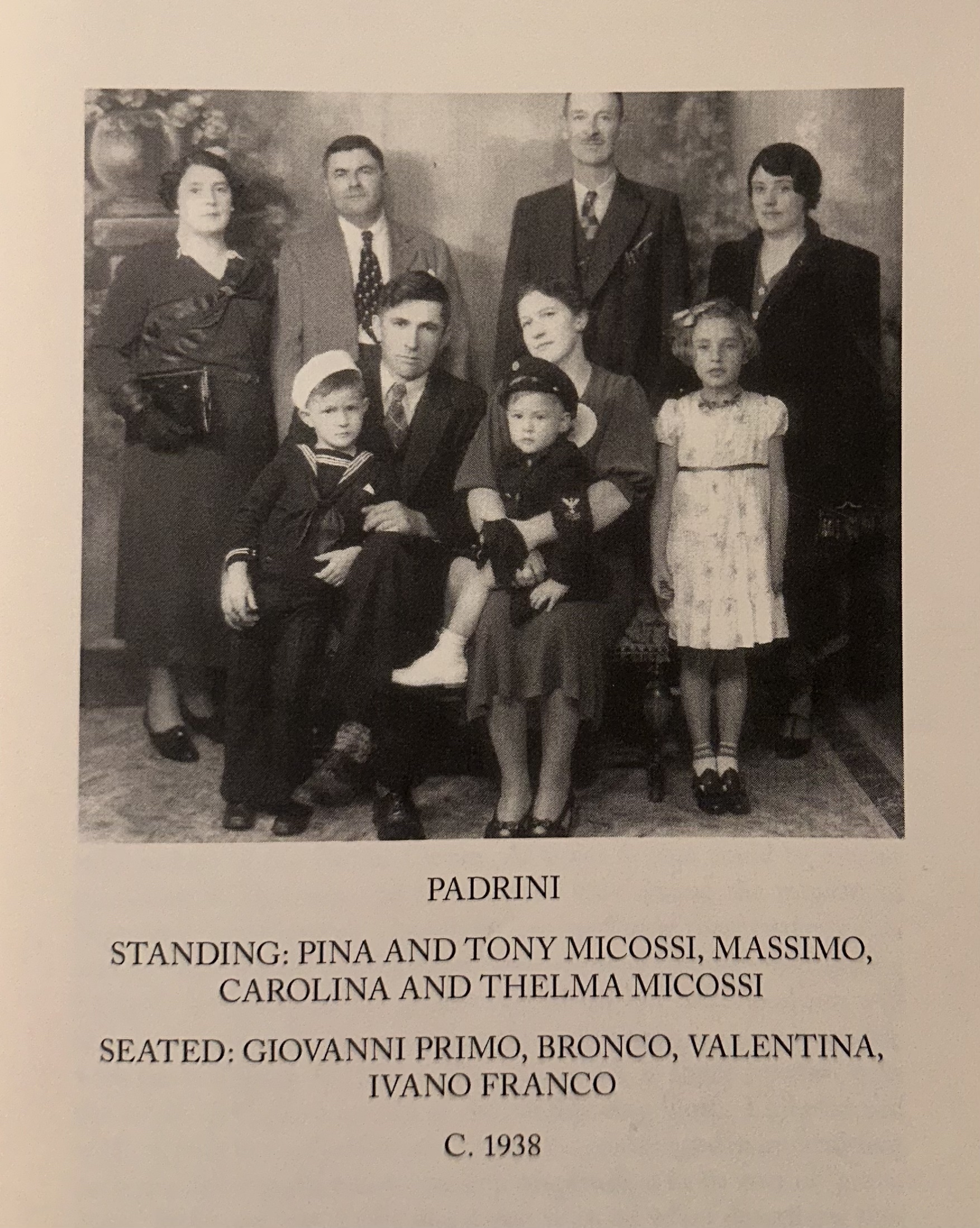
Ivan(o) Franco Comelli was born to Italian immigrants from Northeast Italy, in the Friuli region; his father of whom immigrated to the United States in 1923, and his mother of whom immigrated to America in 1931. Following their arrival in the United States, Comelli’s parents settled on the North Coast of Santa Cruz, near Davenport, where he and his brother would later grow up. Here, his father worked as a farmer on the Gulch Ranch.
Following his retirement from the San Jose Police Department in 1989, Comelli got the notion to write a book because he felt that the ways of the Italians on the North Coast–how they worked, how they spoke, and how they socialized–were getting lost.
His book was written from memories, contextualized from local archives and testimonies from Italian American Santa Cruz locals who shared in the experiences of which he wrote.
According to Comelli, the North Coast at this time was almost strictly Italian, though, there were few Swiss immigrants, as well as some Greek immigrants. He grew up thinking that the coast was primarily for Italians, which is the reason why he named his book “La Nostra Costa.”
He announces that, at this time, Italian Americans didn’t face issues on the Coast because the surrounding areas were predominantly Italian. “They didn’t have to speak English. However, they knew their status. They knew that they were Italian, and they knew that they were not Americans. When we went into town in Santa Cruz, they were aware that they didn’t speak the language well, and that the Americans thought that they were better than them. My parents knew their spot, they were aware of it. But then, they would go back up the coast and it was totally different. In fact, they were in their own element. The coast was Italian and Santa Cruz was American. And we knew it.”
During the interview, Comelli recalls life on the coast as a child. He states, “One thing you'll never forget about the Coast is the wind and the smell of letame [manure].” He continues, stating, “The old Italians, the first thing they wanted to do was get off of the coast. They hated the coast; they worked there, it was their living, but they didn't like the wind, and they didn't like the cement dust, which was really demoralizing. The first thing they wanted to do was to get a new car because it was a symbol of status, and proof of a good year on the ranch. In about 1948 or ‘49 things started getting better on the ranches, so most of them got new cars. We got a brand new 1949 Chevrolet, and boy, were we proud of that! The second thing they wanted to do was get a house in Santa Cruz, to get off the coast. That’s what we did in 1954.” Italian Americans would then commute to work on their ranches from Santa Cruz.
Comelli defines the goal of Italian immigrants upon creating a new life in the United States, revealing that their intention was to work hard, to make some money, and mostly, to live for their children. He states, “They saved their money. Boy, did they save their money. They didn't make a lot of it. And they wanted to give a better life to their kids. They put up with a lot of crap to achieve that.”
Comelli addressed the enemy alien proclamations established by Roosevelt during wartime, stating, “In 1942 when Benito Mussolini made a declaration of war and joined the Nazis, we were deemed enemy aliens–we weren't friendly aliens anymore, we were enemy aliens.”
He continues, describing the experiences of his family, stating, “They divided the coast into restricted and unrestricted zones, using the white line of Highway 1 as the divide. Everyone on the East side of that road was okay, but if you lived on the West side, closest to the ocean, that was a restricted area and you couldn’t go there. The majority of the Gulch Ranch was across the road, on the West side near the ocean, and my father couldn't work that, so there was very little for him to do on the Ranch. So, he had to get another job at the Salz Tannery in Santa Cruz for about six months.”
Comelli recollects one instance in particular while living on the coast during wartime. He describes this memory: “My dad, on one occasion, was almost arrested as a spy–well, I like to say this, but I’m probably exaggerating here–but, we used to have these blackouts, and there would be a Civil Defense Warden who would drive up Highway 1 with his sirens which meant there was a blackout, and we would need to cover our windows. One night–a blackout night–my father came home from work and he hadn’t yet fed the rabbits, and so he decided to take a flashlight to go feed them (of course, up the coast that’s how we lived; we grew our own vegetables, we had chickens, and we had rabbits. Basically, we lived off of the farm, and very rarely did we go out and get meat). The light was shining in the air, moving in all these directions, and all of a sudden this car came barreling down the driveway, and it was the Civil Defense Warden, asking what my father was doing, thinking he was signaling to the airplanes above. He really scared my father, and my father tried to explain to the Warden what he was doing, but he could hardly speak English.”
Additionally, Comelli considered the surrounding farmers on the North Coast, and how their experiences as immigrants differed during World War II. He remarked, “One thing I noticed was that our neighbors on the Coast, the Rodoni’s, were Swiss. Therefore, these restrictions that applied to us, did not apply to them because Switzerland was neutral during the war. So, that was one of the strange things about it, because, although Dante Rodoni was Swiss, he married an Italian, Andreina, and their kids were the same status as I was, but there was a difference.”
I asked about the lingering impacts of these experiences in his parents’ lives. Comelli said that his mother and father were scared after being deemed enemy aliens, that they especially feared deportation. “That could have been easily done. Or they could have been imprisoned.”
This was made evident through an incident with fellow Italian Americans in Santa Cruz. Comelli recounts, “There was a case which involved Lido Gemignani, who was our nextdoor neighbor for a while. He and his friend Aluffi, were out dancing at the Coconut Grove, and they were actually arrested because that was a restricted area close the ocean, and they were aliens. They were arrested and spent 4 or 5 months in a federal prison just for breaking curfew. So, it was serious.”
“This time was scary, and from that experience of being considered enemy aliens, my parents said, ‘Never again.’ In fact, they both became American citizens–my father, during the War in 1944 became an American citizen, and my mother shortly after, in 1945 or ‘46. They weren’t gonna go through that again. It was a scary situation.”
One incident in particular stood out to Comelli. He shared with me one of his father’s experiences, saying, “My father would tell this story of when he was in the process of getting his citizenship, still during the war.
He was at the courthouse, and the attorney asked my father, ‘If you were asked to fight for America, would you fight for America?’
My father responded, ‘Yes. Yes, I would.’
My father still had a couple of brothers living in Italy.
The judge then asked him, ‘Alright, if you saw one of your brothers fighting for the enemy, would you shoot and kill him while fighting for the United States?’
My father was dumbfounded by that question, he didn’t expect it. So, he refused to answer. He said, ‘I don’t understand the question.’
The attorney got very mad, and said, ‘What do you mean you don’t understand? You’ve understood every other question. What do you not understand? Would you shoot your brother?’
My father was saved by his English teacher, Mrs. Sunnybrook, who stepped up and said, ‘I didn’t teach my students this type of question. I taught them the Constitution, the Declaration of Independence, and our history. Not about these type of questions.’ She implored the attorney to move on, and she won. So, he passed, and got to be a citizen. He never forgot that.”
Comelli concluded our interview by reflecting on life for his family following these proclamations and resulting circumstances, stating, “Other than that, they put this experience behind them. They saw an opportunity after the war that things were getting better on the coast, and they could make a better living for their kids, and they put that behind them. They went on.”