Breaking the Chains of Segregation: The Long Road to Integrated Education in America
Birmingham Campaign (1963)
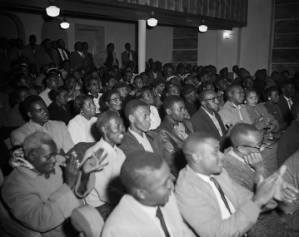
An important turning point in the American civil rights movement occurred in 1963 with the Birmingham Campaign. Birmingham, Alabama, is one of the most segregated cities in the US. Dr. Martin Luther King Jr. and the Southern Christian Leadership Conference (SCLC) spearheaded the movement to end racial segregation in Birmingham via peaceful civil disobedience such as marches, boycotts, and sit-ins. The desegregation of public spaces and businesses downtown was the campaign's primary goal.
While this event was not primarily focused on desegregating public education. It still remains an important factor in the process. Due to the protests and demand for justice, the Birmingham Truce Agreement was reached, establishing a ceasefire to these events. This agreement included better employment procedures for African Americans as well as a strategy for the progressive desegregation of public spaces including schools.
The Civil Rights Act (1964)
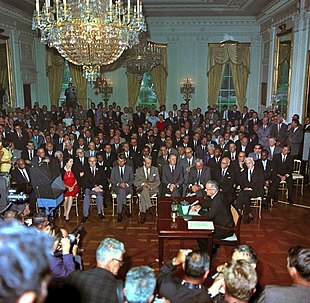
On July 2, 1964, President Lyndon B. Johnson proposed and signed the Civil Rights Act in response to the ongoing Birmingham campaign protests. The act prohibits discrimination in public facilities based on religion, race, national origin, or sex, which includes schools.
Title IV is responsible for authorizing the desegregation of public education in America. This allowed the U.S. Attorney General to file lawsuits on behalf of those who were denied admission to public schools based on their race.
Additionally, the Civil Rights Act provided the federal government the power to withhold financial assistance from schools and other entities that continued to practice racial discrimination. This measure was an influential tool in promoting compliance with desegregation efforts.

Green v. County School Board of New Kent County (1968)
The 1968 Supreme Court case Green v. County School Board of New Kent County was a landmark decision that addressed the issue of "freedom-of-choice" plans used by some school districts as a means to resist desegregation. In this case, the Court ruled that the New Kent County school board's "freedom-of-choice" plan, which purported to offer students the choice to attend a desegregated school but effectively maintained a racially discriminatory system, did not fulfill the obligation to genuinely desegregate schools.
The Green v. County School Board decision held that school boards had a duty to actively eliminate dual school systems based on race and take effective steps to dismantle segregation. It emphasized the need for proactive measures to achieve meaningful desegregation, contributing to the legal framework guiding subsequent desegregation efforts in American education.