Belonging in America
Try the audio tour of the webpage!
Central Question: How did the media help influence, shape, and reinforce American attitudes towards immigration from the 1870s through 1920s?*
Introduction
America is thought of as a place of immigrants, built of those who risked their lives to come and settle this "new land." Even with this historical framework, America has a history of exclusion, especially towards groups seen as "non-white." This is only heightened when looking at a time period like the 1870s-1920s, as this is a huge migration boom within the United States. Throughout its history, discourses about who belongs in America, who is welcome, has taken place. The emergence of negative propaganda and depictions against immigration only furthered the nativism held by US citizens. Even as the groups changed, worries of economic competition, "foreignness", and ethnic and cultural differences were a constant factor for immigrant groups and their social acceptability. Using an interactive map and time line, this exhibit shows how Americans used the media to define social acceptance for certain groups within society.
History of Exclusion
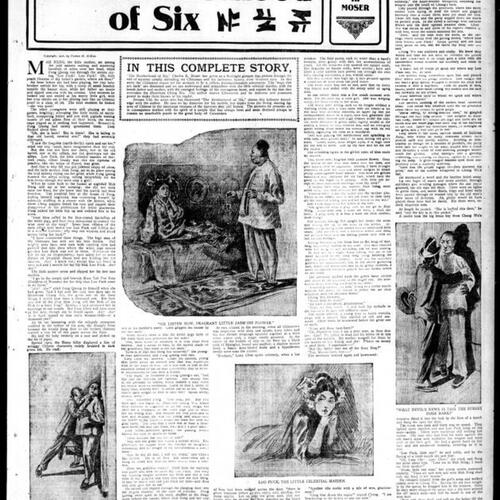
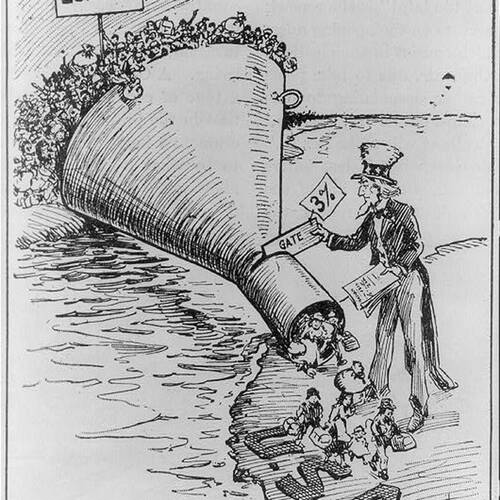
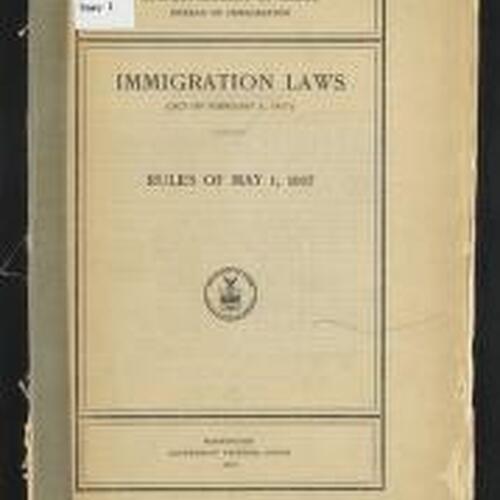
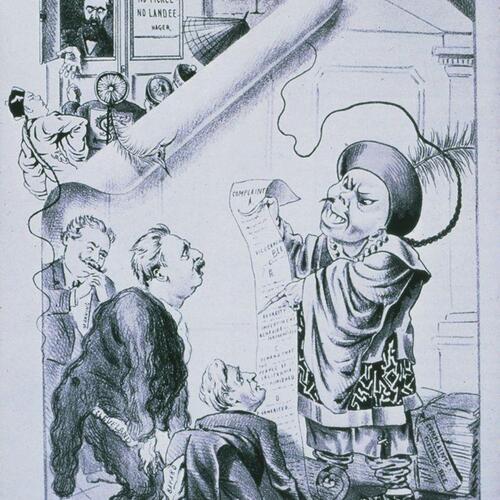
The media in the United States has worried about the threat of the "immigrant" since the early nineteenth century. As the United States began to make more of a name for itself on the global stage, immigration, specifically non-white immigration, started to increase. By the 1880s, media outlets were creating and publishing anti-immigration sentiments. There is an increased focus on immigration as a threat to US society. At the same time legislation like the Chinese Exclusion Act of 1882 was implemented within the United States, cementing US fears into pen and paper. By the 1910s, immigration was happening, whether people wanted it or not. Upward of a million people were “legally” immigrating to the United States before the start of World War I (Ngai). The media started to shift from immigrants being a threat to immigrants being those to blame for issues within the United States. As seen in the Only way to Handle it, immigration was not seen as a looming threat, rather something that needed to be controlled and regulated.
Newspapers and magazines all around the country had thousands of readers with magazines like Life having upwards of 250,000 readers at its peak (Baigell).
Conclusion
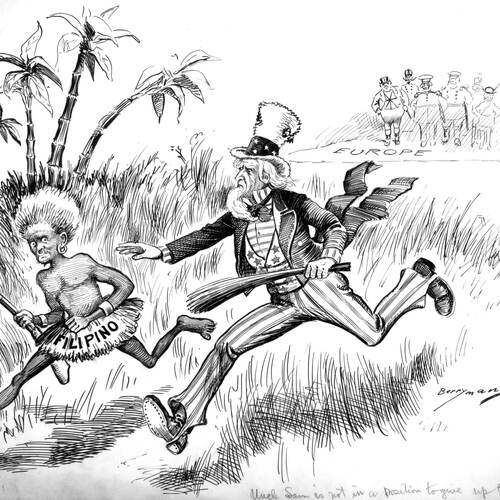
From the 1880s through the 1900s, immigrants were portrayed as a looming threat, by the 1920s many people saw immigration not necessarily as a looming threat, rather a real problem that needed to be regulated. Media on immigration was not just for people to consume, they shaped, reflected, and reinforced societal views. When looked at now with a critical lens, a clear evolution of how immigrants were seen by society can be mapped. Not all media was discriminatory towards immigrant groups, however, influential newspapers and magazines like the Puck and Washington Post were crucial in shaping societal views. Many of these media reflected the racial hierarchy that dominated politics at the time. Overall, this history of media reflects the history of exclusion that the United States. Recognizing this history is crucial to understanding situations the US is facing today. It also can act as a learning tool for society to learn how to ultimately socially accept immigrants within society.