Quipu (Khipu)’s in the Inca Empire
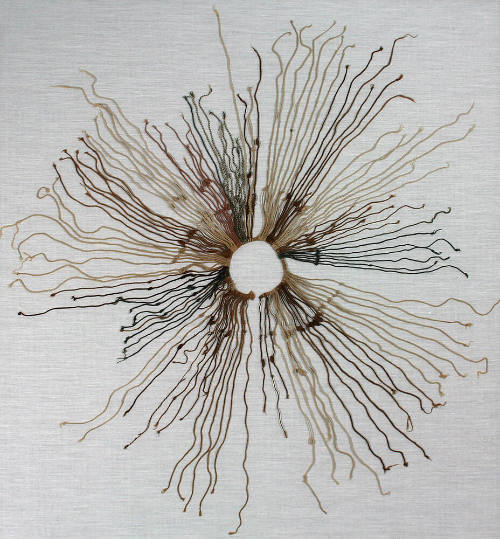
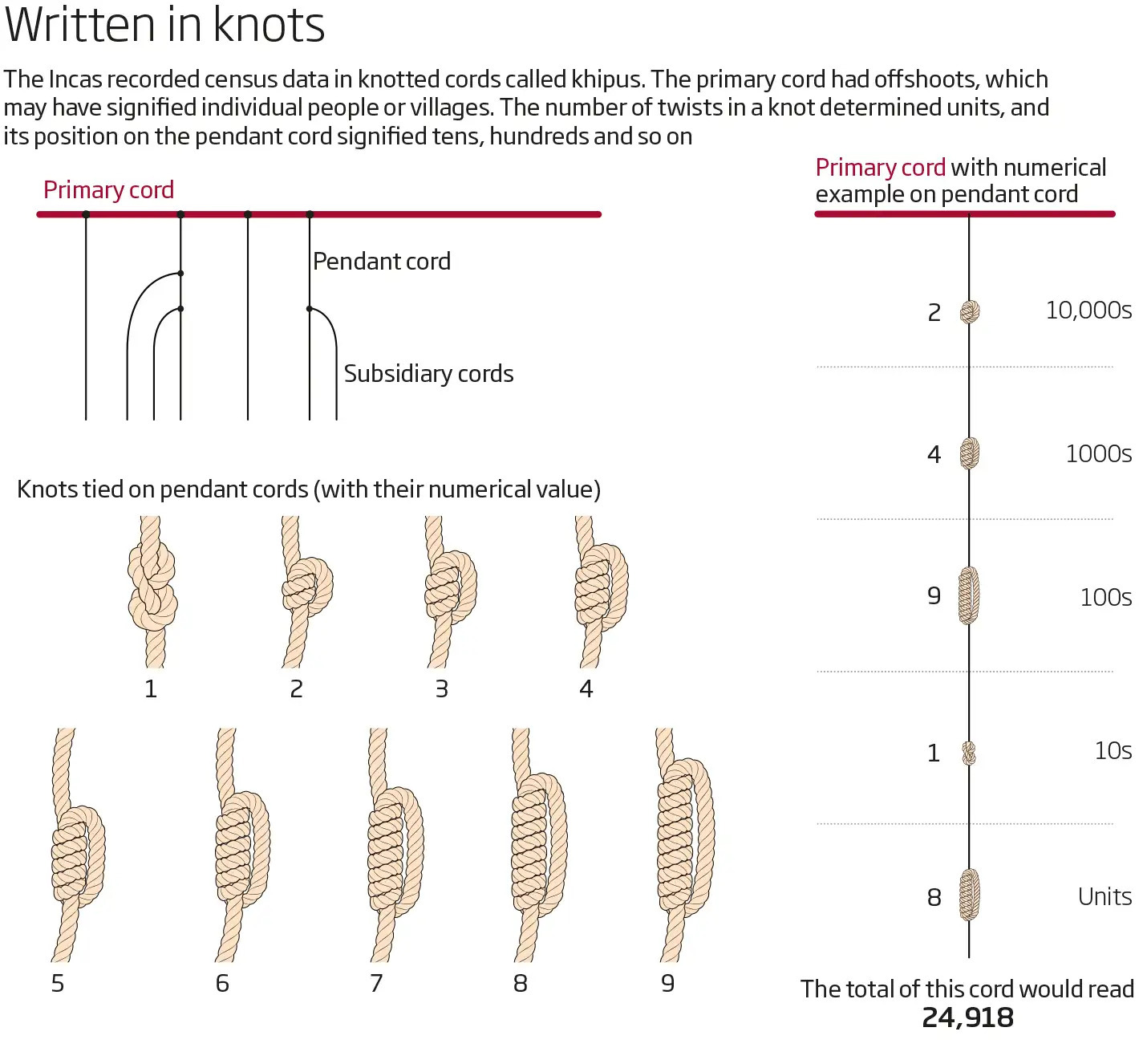
Quipu (Khipu)’s were an ancient form of writing system used by the Andes in the Inca Empire in approximately the 1400 - 1532’s CE. This writing system included cords made from things such as animal fibers, cotton, and other plants “by means of a primary trunk cord, with pendant and subsidiary cords, each with conventionalized knots and colors” (Englehardt, 41). Each pendant cord was knotted in a specific order referring to 1’s, 10’s, 100’s, 1000’s, and 10000’s placed a specific distance from one another. These knots were tied around the pendant cord wrapped anywhere from 1 to 9 times, determining the number represented. Every aspect of a Quipu was essential to the final information given in the end. What I mean by this is from the space between the knots, to the amount of times it is wrapped around the pendant cord, to the type of knot that ties the pendant cord onto the primary cord, to the color of the cords represent important information. It is believed that Quipus were used for accounting purposes for a vast variety of things from crops to tracking the days in the year. Additionally, it is believed that these Quipus were meant to be read in front of a crowd, however, not everyone could read or create these. The people responsible for creating and presenting these Quipus were called Quipucamayocs. These semasiografic devices were read “By virtue of mutually agreed symbolic values, the knots and strings functioned as readable notations, legible to those persons trained in their workings”(Englehardt, 40).