Labyrinthe Aesthetic and Public Memory Work
History of Labyrinth
The most famous labyrinth in Western imagination is from Theseus and the Minatour from Greek mythology. The story goes that at the Minoan palace of Knossos a half-bull half-man creature that was hidden in the Labyrinth, constructed by Daedalus, and Theseus with the help of the princess Aridane was able to slay the Minator then find his way out of what was an inescapable maze. This story is a part of a long tradition. The labyrinth’s design is over 4000 years old and examples can be found in Europe, America, Scandinavia, Afghanistan, Sri Lanka, India and Nepal.
Labyrinths feature in folklore and architecture from around the globe and it is thought to be a cultural symbol of the eternal cycle that is birth, death, and rebirth (Malim, 2019). In literary studies the labyrinth is used as an analogy for life and drawn on in tales of transformation and complexity. It has been drawn on in works from Homer to Chaucer, Milton to Yeats, and Joyce to Kafka (Naço, 2013).
The religious tradition of labyrinths originates from medieval practices tied to pilgrimages but is now also linked with mediation, stress relief, and a place for reflection (Colonnese, 2018; Kahl, 2016; Sardella, 2016; Valette, 2013). People who could not make pilgrimages to Jersusalem could instead come to a cathedral like Chartres and trace the unicursal, one way, path. Boston College recently constructed a replica of the labyrinth from Chartres as a tribute to the 22 alumni lost in 9/11. They urge people not to rush the experience but instead to “submit to its structure and discipline” and be mindful that this labyrinth is analogous to the universe and a tool for meditaiton (“Boston College”).
The labyrinthe aesthetic is currently being used as a narratological experiment in exhibition museum design (Basu, 2007; Witasiak, 2016). Paul Basu in “The Labyrinthine Aesthetic in Contemporary Museum Design,” evaluated how the Polish-American architect Daniel Libeskind displays this technique through the construction of his Holocaust museums: Osnabrück’s “Museum Without an Exit,”and Berlin’s Jewish Museum. These museums have architecture that feature constraining corridors, fragmented paths, acutely angled walls, dead ends, voids, and asymmetries. Basu argues this disorientation decenters the centeralized grand narrative that comes from curatorial authority and provokes visitor’s to become inventive, generating new understandings rather than reproducing the intentionally programmed ones (54).Vistors find more opportunity to construct their own meaning and reconsider their postions to history.
Libeskind made this spatial journey circuitous, meandering, and with divisions that work to frustrate progress with the hope that this labyrinth aesthetic will inspire active participants in history. So that eventually; “We discern a story or stories but we are never left in doubt that the ‘‘whole story’’ is always beyond: that there are corridors as yet unexplored and undiscovered, that there is always an excess of meaning” (Basu 68).
Public Memory and Narrative
Scholars of public memory in the field of rhetoric discuss how sites of memory, such as monuments and museums, embody rhetorical principles that reinforce a shared sense of history (Blair, 2001; Dickinson, 2010; Holleran & West, 2000; Phillips 2010). Phillips was concerned in "The Failure of Memory" that memory is potentially a dangerous experience "...connected as it is with imagination, memory occupies an unstable and fantastical space of absence (216). What becomes public memory is not necessarily accurate but it becomes the truth to a public and thus a powerful rhetorical tool.
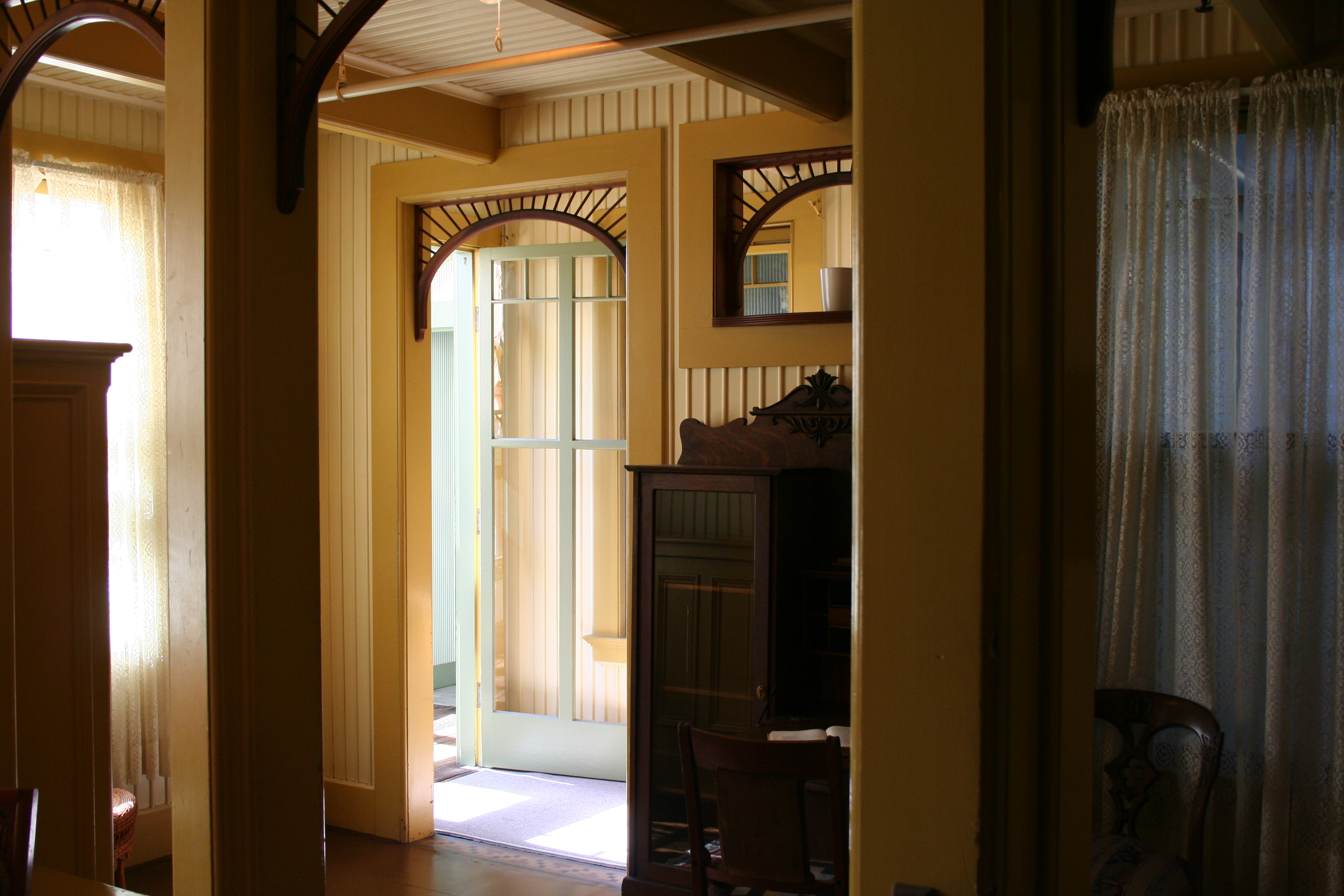
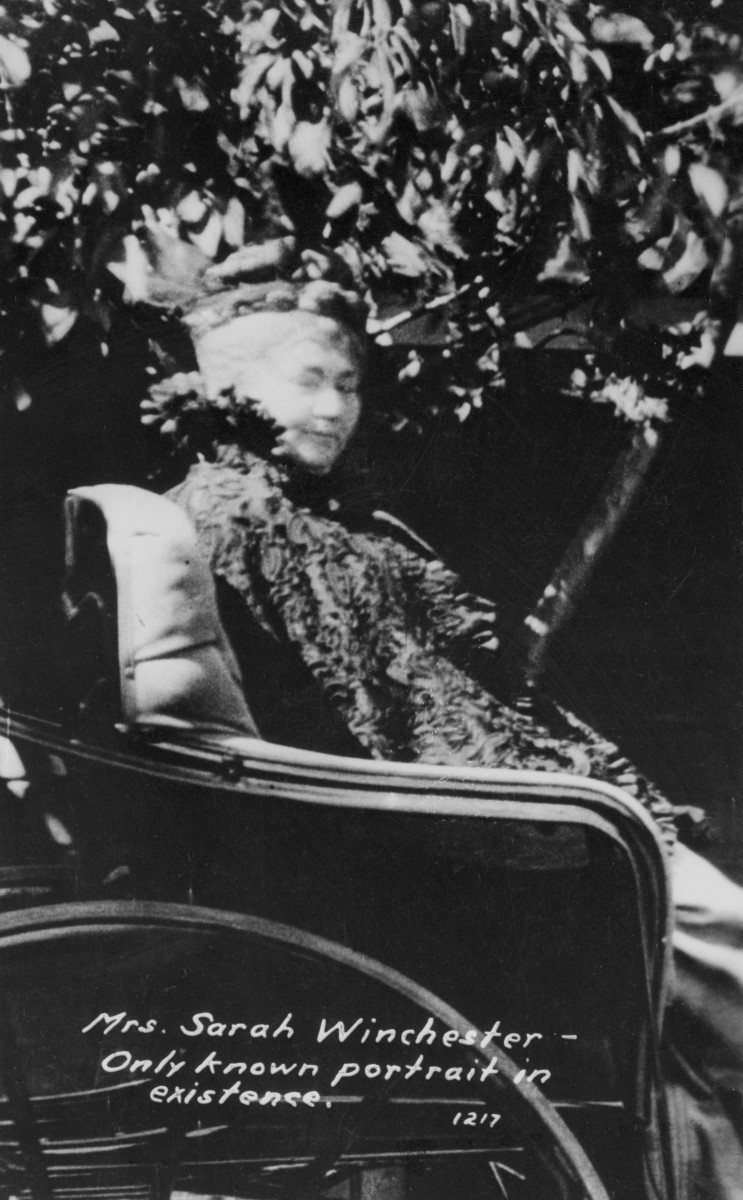
The Winchester Mystery House is deeply engaged in this public memory work. The pervasive myths surrounding Sarah Winchester and the ghostly myths that haunt her space have created a widely accepted public memory. Basu’s piece on Holocaust museums is closely tied to the concept of public memory. Libeskind’s labyrinthe architecture helped visitors encounter diffrent narratives from history. Architecture is the rhetorical tool that is performing public memory work. Rhetorical work that fights against a passive museum experience and instead asks for wider engagement from visitors.
Holleran & West studied house museums and the persistence of cultural memory, “house museums are products as well as purveyors of history.” (41). It is not just a museum because of the framing it becomes influenced by the present day cultural anxieties which then in turn affects public memory. Often American house museums can become superseded by mitigated by creation myths and current cultural politics. The WMH has a public memory that has been informed by a telling of history that maligns and discounts women. This is important because the history we tell ourselves informs the present. Women were always capable of being architects but public memory promotes the idea Winchester was spiritually-obsessed, irrational. Not only do past anxieties inform this rhetoric but our present ones. The WMH invites us to evaluate how we shape sites of public memory. As Lueck wrote in "Haunting Women’s Public Memory: Ethos, Space, and Gender in the Winchester Mystery House," aruging that the house challenges the way we think about space, particuarly domestic space, and how women's publically memory has been and continues to be constructed by every visit to the house.
Dickinson & Aiello (2016) proposed a methodological approach of "being through there" in examining urban environments. This is an approach that looks at cities by observing the materiality, bodies, and movement. The WMH lends itself to this embodied approach as seen in the work by Lueck in "Methodological Haunting: The Ephemeral Evidence of the House Tour" she studies the WMH tour as an embodied researcher. By looking at the material that is set out in the tour, her own body within that space, and everything affected by temporality-every tour changing with time- she realizes that the meaning of this house is far from stable. It is unfinished like its construction; "The meaning of the house is also unstable insofar as it continues to be rhetorically and symbolically constructed by the visitors who traverse the space, experiencing it together and leaving their physical and representational traces. It is thus that, as a researcher, my own body matters to the site I study" (6).
The WMH has that ability to make the visitor all too aware of their materiality and movement, their body moving through space. It is impossible not to be there when you are there. Every step and glance is felt because the space lends itself to that displacement. The WMH is a labyrinth because it facilitates this experience. Here, in this unstable place, there is room to grasp public memory and observe how its construction is not as stable as it appears.